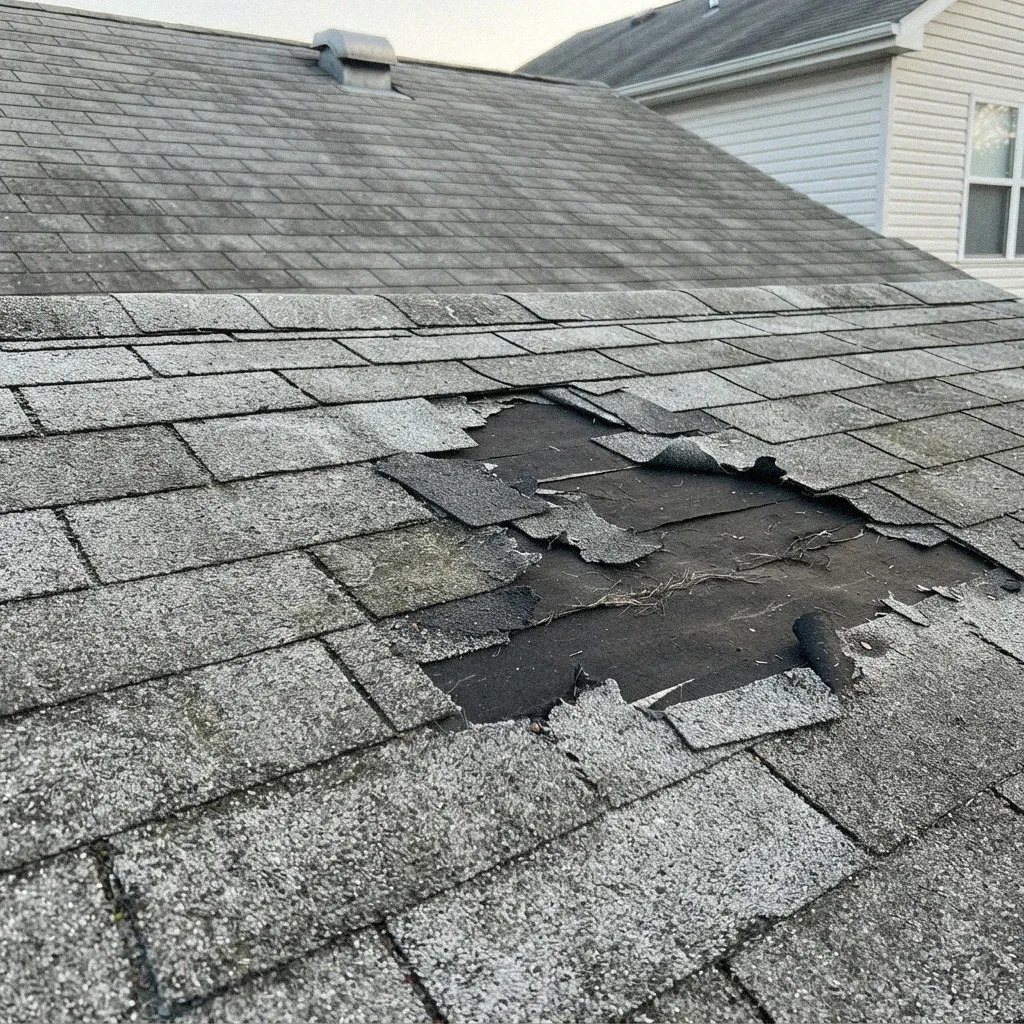
Should Your Jacksonville Roof Be Patched or Torn Off
How roof age, deck condition, and layer count decide whether a Jacksonville roof gets repaired or torn off.
Fixing part of a Jacksonville roof makes sense when the deck underneath is still solid and enough matching shingle life remains to justify the patch. A full tear-off wins once age, discontinued shingle lines, or storm-driven damage push spot repair past what it's worth.
How Much Roof Life Is Actually Left
A Jacksonville roof rarely quits outright. It slides from solid to questionable across years of afternoon thunderstorms battering the same valleys and penetrations, and the real question for a Northside or Arlington homeowner is where on that slide the roof currently sits. Age tells part of it, deck condition tells more, and the extent of visible damage tells the rest. Treating any one of those three as the whole answer is how homeowners end up either overpaying for an early tear-off or pouring money into a roof already past saving.
Look at the damage before guessing at fixes. A few shingles peeled back near a ridge after wind off the St. Johns River corridor, a stain spreading under a bathroom vent, a soft spot near a valley that only shows itself after a hard rain — each of those points somewhere different, and none of them by itself answers whether this is a repair job or the start of a full reroof.
Deck condition settles more of this than people expect. Pull the damaged shingles back and look at the plywood underneath. If it's dry, flat, and holds a nail the way it should, a patch or a slope-by-slope replacement can work. If it's dark, spongy, or crumbles at the edges, the conversation has already moved past shingles into rebuilding the surface those shingles sit on.
Reading What The Damage Is Telling You
Repair or replace is not really a judgment call, it is three questions with fairly clear answers. How much of the roof has failed. Whether the deck underneath is still sound. And how many years the covering had left before this happened. Answer those honestly and the decision usually makes itself. Where it goes wrong is when the roof is judged on how bad the ceiling stain looks inside, which tells you nothing about how much of the roof is involved.
The way damage sits across a roof tells you more than its age does. A leak confined to one dormer or one valley points toward a spot repair. Wear spread evenly across every slope, granules collecting in gutters from Riverside to San Marco alike, points toward a roof that's aging out everywhere at once rather than failing in one spot that a patch can chase down.
- Roof age measured against the shingle manufacturer's rated years shows how much remaining service life a Jacksonville roof actually has left.
- Damage confined to one slope or one flashing point is usually a spot repair; damage spread across several slopes points toward replacement.
- Deck condition rules on whether a patch has anything solid to fasten to, since soft sheathing needs replacing either way.
- Existing layer count matters because a roof already carrying two layers cannot take an overlay and must come off down to the deck.
- Shingle availability affects patch matching; a discontinued shingle line from an older Jacksonville reroof forces a visible color break on repair.
- A pending home sale can tilt the decision toward replacement even on a roof with life left, since it removes a resale disclosure question.
What's Under The Shingles Decides A Lot
Patch matching ends more repair plans in Jacksonville than the damage itself does. A shingle that's spent a decade or more under the sun here fades and sheds granules in a way a new bundle from the same product line simply won't replicate, and if that line has become a discontinued shingle line, matching color and profile stops being a supply question and becomes a dead end.
Age changes what the material can do, not just how it looks. Shingles that have gone through years of Jacksonville heat and afternoon rain lose flexibility, and asking them to bend back into place around a patch often cracks them instead of sealing them. That loss of shingle pliability is a separate problem from fading, and it can rule out a repair even when a matching shingle happens to be available.
- Weigh the repair estimate against the years of remaining service life it buys, not just against the price of a new roof.
- Deferred maintenance, like a gutter left clogged through a Jacksonville hurricane season, can shorten a roof's remaining years faster than age alone.
- Insurance-driven replacement in Duval County usually follows a named storm or hail event, not the slow wear that leads most repair calls.
- A layover adds one course over sound existing shingles and costs less, but it carries forward whatever flaws already sit underneath.
Repair Or Replace, Side By Side
Run the numbers side by side once the technical picture is clear. A repair that costs a few hundred dollars but only buys two or three more years reads differently than the same repair on a roof with a decade of honest life left. Divide what each path costs by how many years it plausibly extends the roof, and the cost per remaining year usually points toward one answer more clearly than the shingles alone ever could.
A partial reroof fits between a spot repair and tearing the whole thing off, and it earns its place when wear or damage concentrates on one exposure rather than spreading everywhere. A west-facing slope that's taken more sun in a Southside or Mandarin neighborhood can wear faster than the rest of the same roof, and replacing that one section on its own schedule is often the more honest path than either patching it repeatedly or redoing slopes that still have years left.
| Consider | Repair Makes Sense | Replacement Makes Sense |
|---|---|---|
| Roof age | Well short of expected shingle life | Near or past its rated years |
| Damage extent | Confined to one slope or vent | Spread across several slopes |
| Deck condition | Sheathing feels firm underfoot nearby | Sheathing sags, feels soft, smells musty |
| Shingle match | Same shingle still sold locally | Color or line no longer made |
| Layer history | Original layer, nothing stacked on it | Already carrying a second layer |
Selling Soon? Weigh A Full Reroof
Listing a home in Ortega or San Marco changes what a roof is worth fixing for, separate from what it would cost to live under. A buyer's inspector flags an aging roof whether or not it is actively leaking, and that flag becomes a negotiating point during the sale regardless of how many good years the shingles had left. Sellers often get more back from a documented spot repair and a clean resale disclosure than from a full reroof nobody living in the house will benefit from.
An insurance-driven replacement follows a different clock than one planned around wear. Wind lifting shingles during a named storm, or a limb landing across a slope after heavy rain, forces a decision on a timeline the homeowner did not choose, often before every estimate is in hand. That urgency is real, but it should not be allowed to skip the deck inspection or the layer-count check — a rushed reroof approved under claim pressure still has to hold up over the St. Johns River's humid, wind-loaded summers for decades afterward.
Selling Soon? A Repair Might Be Enough
Bringing this together for a Jacksonville roof: start with the deck, because soft or delaminated sheathing changes the scope of the job no matter what condition the shingles above it are in. Count the layers next, since a roof already carrying the maximum allowed under the Florida Building Code has no overlay option left and any further work becomes a tear-off by default, whether the house sits in Springfield or out near Cedar Hills.
From there, check whether a matching shingle actually exists, and whether the ones already on the roof still bend without cracking. Add up what a repair costs against the years it plausibly extends the roof, and factor in whether hurricane season, an insurance claim, or an upcoming sale is shaping the timeline. Put those pieces next to each other and the choice between repair and replacement usually becomes obvious well before a final decision has to be made.
What Jacksonville's Permit Process Expects
- A reroof inside city limits goes through the Building Inspection Division on the JaxEPICS portal, pulled under the contractor's license, with an inspection before final payment.
- Florida Building Code caps roofs at two layers of roofing material, so a house already at that limit needs a tear-off, not another overlay.
- Shingle pliability drops as a roof ages, so older shingles near Arlington or Mandarin can crack rather than lift cleanly during a patch.
- Afternoon thunderstorms through a Jacksonville summer test flashing and valleys hardest, which is when a small leak usually first shows itself indoors.
- Duval County's rare hard freezes, mostly gone by mid-February, mean cold weather rarely forces a reroof to wait the way it does farther north.
- A resale disclosure that lists roof age or a past repair can slow a sale even when the roof itself still has years left.
Frequently Asked Questions
Is patching this leak worth it or should I just get a new roof?
Deck condition decides it. If the sheathing under the damaged section in your Springfield or Mandarin home is still firm and dry, a patch matched to the existing shingle run is usually the right call. If the deck has gone soft or spongy from repeated water intrusion, no patch holds, and the conversation moves to a partial or full reroof instead.
Is it worth patching an old roof?
Yes, in narrow cases. If a roof is still watertight but nearing the end of its rated years, a spot repair can buy a season while a Jacksonville homeowner plans a full tear-off around a slower month. It stops making sense once granule loss and curling spread past one section, or the deck underneath has started to soften.
Why won't my roof patch match the rest?
Common on older homes around Murray Hill, Avondale, and Springfield where the original shingle line has since gone out of production. A patch matched from a similar but not identical shingle will show as a color break on that slope. Some homeowners accept the seam; others use it as the reason to move to a full replacement instead.
What does soft decking under a leak mean?
It can. Duval County's shallow water table and heavy summer rain give trapped moisture more time to sit against sheathing than a single afternoon thunderstorm would explain. Soft decking under a damaged spot usually points to a leak that has been active for a while, not a one-time event, and it needs new sheathing before any new shingle goes down.
Can a roofer replace just one slope?
Yes, on houses with a roofline that separates cleanly by slope, such as a rear addition or a garage wing distinct from the main roof. A slope-by-slope replacement lets a Jacksonville homeowner address the section carrying storm damage or age without touching slopes that still have years of service life left, though shingle color match across the seam is worth checking first.
Ready To Get A Straight Answer On Your Roof
Not sure if your roof needs a patch or a full tear-off? Talk to a licensed pro who can look at the deck first.
Call (904) 675-6349