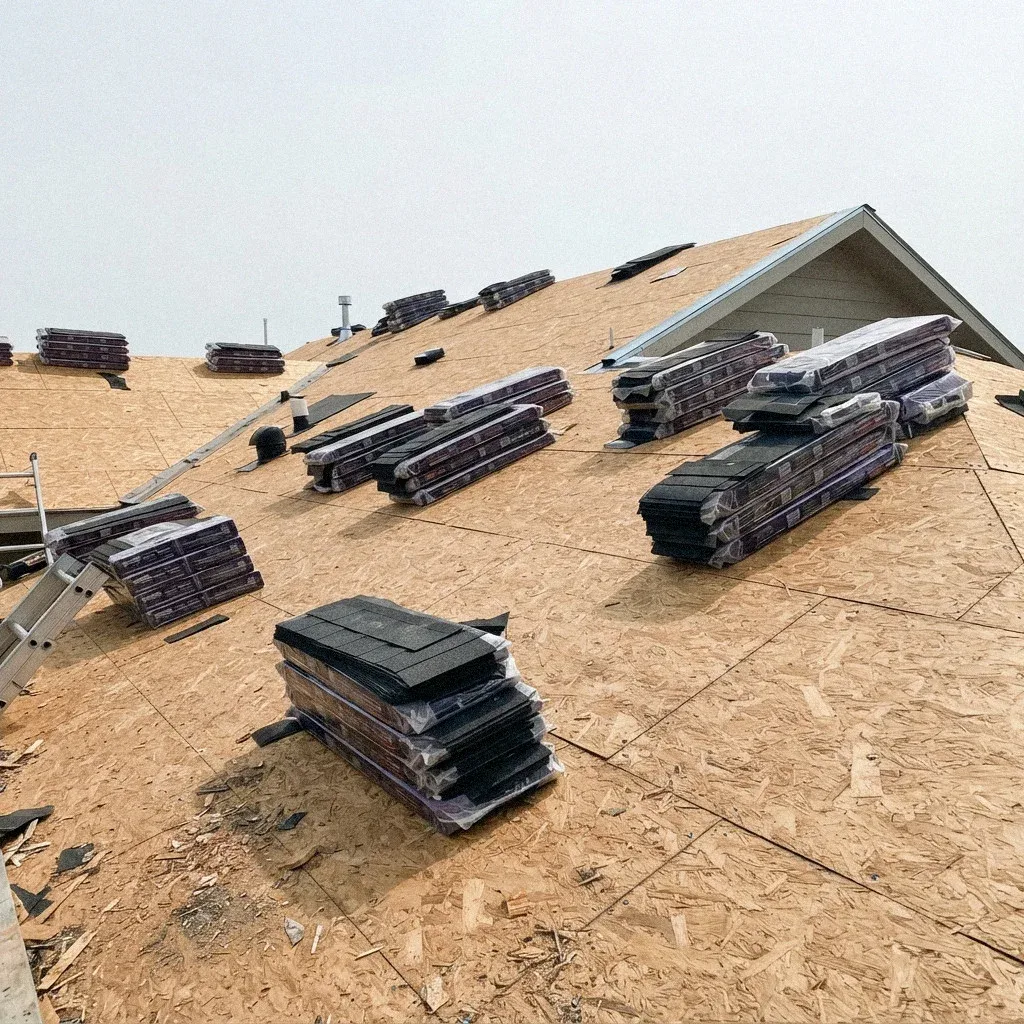
Roofing Permits and Code Rules in Jacksonville
What triggers a Jacksonville roofing permit, who pulls it, and which code items apply regardless.
A Jacksonville reroof almost always needs a permit reviewed against the Florida Building Code, pulled before work starts, with inspections at defined stages and a closing document once the roof passes final review.
When a Reroof Needs a Permit
A roofing permit in Jacksonville is triggered by the type of work, not its dollar amount alone. Tearing off and replacing roof covering, recovering over an existing layer, and structural repairs to decking all fall under the Florida Building Code as locally administered by the Building Inspection Division. A homeowner patching a small area after a limb comes down in Riverside during an afternoon thunderstorm may fall into a gray zone, but a full reroof on a house in Mandarin or Arlington does not.
The permit trigger question gets confusing because Jacksonville's own guidance carves out a narrow exception: an owner-builder putting on a new home or addition does not always need a separate roofing permit for that specific job. That exception does not extend to a homeowner in Springfield or San Jose deciding to reroof an existing house themselves, and it does not mean the work can skip inspection or code compliance. The carve-out is specific, not a general escape from permitting.
Roofing contracting itself is licensed at the state level under Florida Statutes Chapter 489. A roofing contractor working in Jacksonville needs to hold a Certified Roofing Contractor license, valid statewide, or a Registered Roofing Contractor license tied to this jurisdiction, both issued through the Florida Department of Business and Professional Regulation. That license status can be checked directly through the DBPR's own lookup tool before any permit gets pulled.
Plan Review and the Permit Holder
The licensed contractor doing the work is typically the one who applies for the permit through the city's JaxEPICS portal, becoming what the Building Inspection Division treats as the permit holder of record. A homeowner in Ortega or St. Nicholas hiring someone unlicensed loses this path entirely, since the city ties the permit application to a verified state license number rather than issuing one on the homeowner's word alone.
Plan review on a standard reroof in a neighborhood like Murray Hill or Avondale is usually a quick administrative check rather than a deep structural analysis, since the scope is a covering replacement, not a redesign. Where a roof has suffered decking damage, changes pitch, or adds load the original structure was not built for, reviewers look harder at framing details before the permit moves toward inspection stages at all.
- Full roof replacement, tearing off old material down to the deck, triggers a permit almost every time in Jacksonville.
- Roof repair beyond minor patching, including sheathing replacement after a leak, generally needs its own permit too.
- New construction and additions roll roofing into the building permit already covering that structure, with narrow owner-builder carve-outs.
- Recovering over existing shingles without removing them still counts as reroofing work under the Building Inspection Division's review.
- Commercial buildings in Downtown, Southside, or along Southside Boulevard follow the same permit trigger as houses in Arlington or Mandarin.
- The contractor of record, not the homeowner, typically submits through JaxEPICS and becomes the permit holder listed on the job.
Rough and Final Inspection Stages
A permitted reroof in Jacksonville generally moves through at least one rough inspection before coverings go down, where an inspector checks the exposed decking, underlayment, and flashing details at valleys and penetrations. This is the point where problems hiding under old shingles in a Springfield bungalow or a Southside ranch house get caught, before they are sealed under a new layer where nobody will see them again for twenty years.
A final inspection wraps up the permit and gets recorded on the inspection card the city keeps for that address, which is the paperwork trail a certificate of completion depends on. Skipping this step does not make the roof less real, but it leaves a gap in the property's record that tends to surface later, often at the worst possible moment for a homeowner trying to sell a house in Riverview or Eastside.
- Florida Building Code sets a practical layer limit, pushing most reroofs toward tear-off rather than stacking a third layer on top.
- Two layers already on a Riverside bungalow or Springfield two-story usually means the next job strips both down to the deck.
- Deteriorated or soaked decking under the old layers forces tear-off regardless of how many layers are technically present.
- Flashing at chimneys, walls, and valleys gets its own inspection scrutiny since misdirected water there causes most reported leaks.
Layer Limits, Fastening, and Ventilation
Florida's building code sets a layer limit on recovers, and it is stricter than a lot of homeowners assume going in. Roof covering generally has to be stripped down to the decking once a certain number of existing layers are already present, rather than letting a new layer simply go on top indefinitely. This matters most to older homes in Durkeeville, Panama Park, and other established neighborhoods where a roof may have already been recovered once before.
Layer limits also depend on what the tear-off inspection finds, not just the count on file. A permit holder of record who opens a valley near Riverside or Avondale and finds soft or delaminated decking has to address it before the new layer goes down, regardless of how many layers were planned. Code compliance follows the actual substrate on a given day, not the assumption written into the original permit application.
| Code Item | What It Covers | Why It Matters Here |
|---|---|---|
| Layer limit | How many old layers can stay under new roofing | Extra layers add weight the deck wasn't built for |
| Fastener schedule | Nail or screw pattern for the wind zone | Jacksonville's design wind speeds demand a tighter pattern than milder climates |
| Underlayment requirement | Water barrier installed before the finished roofing | Backs up shingles during driving summer rain before it reaches the deck |
| Ventilation requirement | Balanced intake and exhaust airflow in the attic | Poor airflow traps heat and moisture under a Jacksonville summer sun |
| Flashing requirement | Metal or membrane detail at valleys, walls, and penetrations | Most reroof leaks trace back to a flashing detail, not the field |
HOA Approval Sits Outside the Permit
Code requirements around how a roof is fastened down, what underlayment goes beneath the covering, and how flashing is detailed at chimneys, valleys, and wall intersections apply whether a permit was pulled or not. A house near the St. Johns River in San Marco or Ortega Forest facing wind-driven rain during hurricane season depends on these details holding, regardless of whether anyone ever filed paperwork for the work that was done.
Attic ventilation requirements matter here because Jacksonville's heavy, sustained summer rainfall and long humid stretches push moisture into attic spaces that needs somewhere to go. A poorly vented attic in a Westside or Northside home can trap that moisture against the underside of the decking, which shortens the life of a roof covering long before it would otherwise need replacing, permit or no permit involved.
Unpermitted Roofs and Resale Problems
HOA architectural approval, where it applies in a covenanted subdivision, runs on a separate track from the city's permitting process entirely. A homeowner in a planned community near Baymeadows or Deerwood may need sign-off on shingle color or style from an architectural committee before work starts, and getting that approval does nothing to satisfy the Building Inspection Division's own permit and inspection requirements, or the other way around.
Unpermitted roofing work tends to turn up during a home sale, when an inspector or the closing process notices a roof that looks recently replaced with no permit history on file at the city. For a house in Cedar Hills or Arlington Hills, that gap can slow down a sale or trigger a demand that the work get retroactively permitted and inspected before the deal moves forward, which is rarely a fast process.
Quick Reference for Homeowners
- Inspection stages follow whatever the issued permit lists, sometimes reviewed at a preconstruction meeting with the inspector.
- A rough inspection typically happens after tear-off, once decking is exposed and before new underlayment goes down.
- A second check often covers flashing at valleys, chimneys, and penetrations before shingles or another covering goes over it.
- Skipping the permit doesn't just risk a fine — an uninspected reroof can complicate a Duval County home sale down the road.
- HOA architectural approval and historic district review, where a Riverside or Avondale home falls under one, sit apart from the city permit entirely.
- Unpermitted work surfaces later at resale, complicating disclosure, financing, or an insurance claim tied to that roof.
Frequently Asked Questions
Does every roof job in Jacksonville need a permit?
Jacksonville's Building Inspection Division ties the permit trigger to the type of roofing work, not a set dollar figure. A straightforward tear-off and reroof needs a permit pulled by a licensed contractor through JaxEPICS. The narrow exception is an owner-builder roofing their own new construction or addition, which does not apply to reroofing an existing house.
Who actually applies for the roofing permit?
The licensed contractor doing the work applies for the permit through the JaxEPICS portal and becomes the permit holder of record. Florida law bars an unlicensed roofing contractor from pulling that permit or advertising roofing work at all, so the name on the permit should match the crew on the roof.
How many layers of shingles are allowed?
Florida Building Code pushes most Jacksonville reroofs toward a full tear-off rather than letting layers stack indefinitely. A second layer over the first can sometimes pass, but once decking underneath shows damage or soaking, tear-off to the deck becomes the only path regardless of layer count.
What gets checked during a roof inspection?
Inspectors generally check the job at stages tied to the permit itself, often a rough inspection once old material is off and decking is exposed, then a look at flashing and underlayment before final. The final inspection closes the permit and clears a certificate of completion.
Does HOA approval take the place of a city permit?
Ask to see the permit posted at the job site or request the number and look it up yourself with Duval County's Building Inspection Division. A roofer unwilling to show it, or one insisting your reroof needs none, is a signal to get a second opinion before work starts.
Wondering what your reroof actually needs?
Not sure whether your reroof still needs a permit filed? Talk to the licensed pros we connect you with first.
Call (904) 675-6349