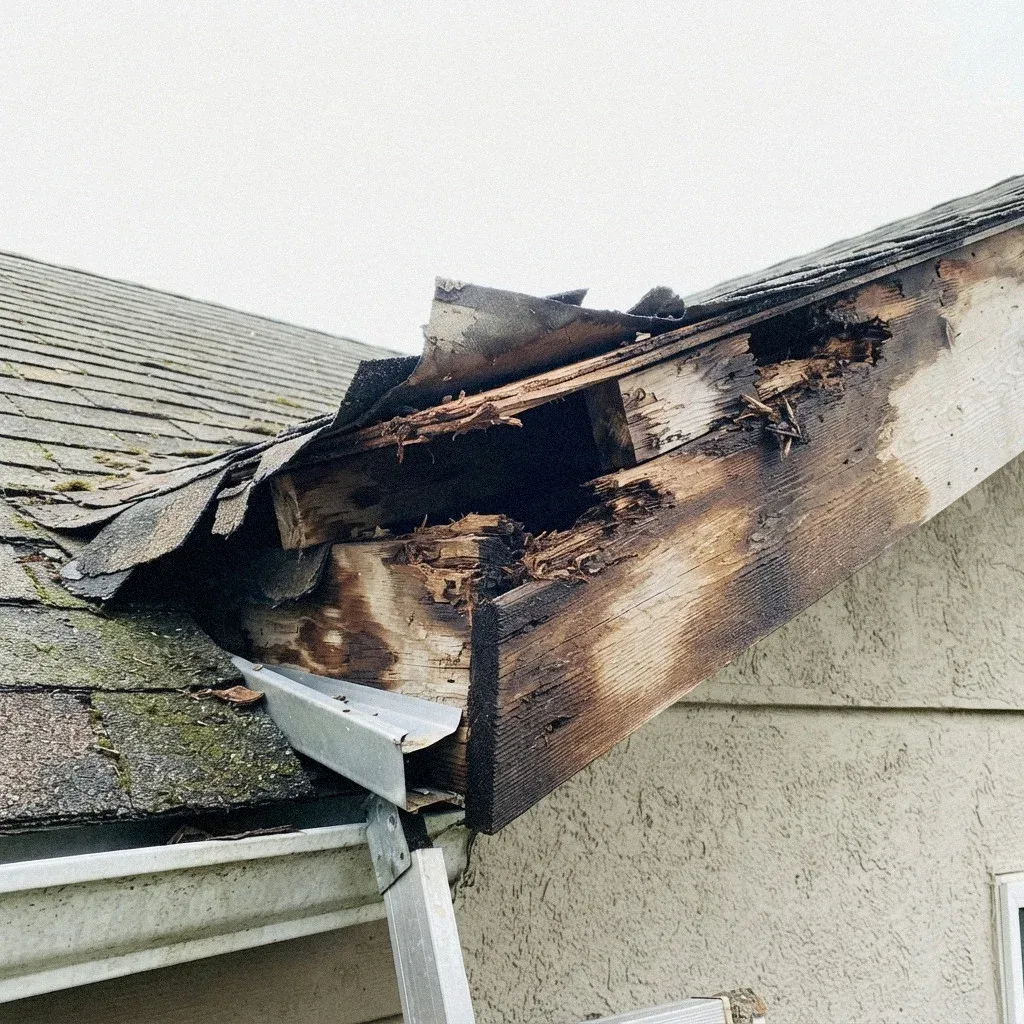
How Wind Gets Under Shingles
Jacksonville's heavy June-through-September rainfall keeps shingles damp for long stretches, and that steady moisture, not the region's occasional freeze, is what lets algae spores establish and spread across a slope.
Neighborhoods with mature tree canopy, like Avondale, Ortega, and Riverside, hold shade longer over their roofs, so those slopes dry slower than open rooflines out toward the Southside or Baymeadows.
Attic ventilation matters more in Jacksonville than most homeowners realize, since afternoon thunderstorms push heat and moisture into a hot deck all summer. Poor airflow softens decking from underneath long before a visible leak shows up, whether the house sits in Mandarin or out toward Oceanway.
How Long a Roof Really Lasts Here
- Location
- North-facing slopes, shaded valleys, and sections near a ridge or hip that stay damp longer between afternoon thunderstorms.
- Cause
- Dark gray to black streaks or blotches following the water path down the shingle, sometimes reaching the eave.
- First Sign
- Airborne algae spores landing on granules and feeding on limestone filler, spreading fastest where shade and moisture linger.
- Season
- Slow; streaking builds over a few humid seasons and rarely forces a repair on its own within a year.
- Untreated Risk
- Left alone, algae keeps shingles damp longer after each downpour, slowly thinning the granule coating and exposing the mat beneath.
- Active period
- Algae streaking tends to show up most after Jacksonville's long, humid stretch from June through September, when repeated afternoon thunderstorms keep shaded slopes wet. Cleaning bookings often pick up once drier fall weather arrives.
- Typical repair
- an estimated $400–$1600
Why Roofers Talk About Timing
Algae streaking gets mistaken for soot or tree sap staining, since both leave dark marks on a Jacksonville roof near overhanging oaks in Avondale or San Marco without any granule loss underneath. The test is scraping a small patch. Algae wipes to a greenish-black smear because it is a living film; soot or sap stays dry and flaky, and neither responds to a bleach-based cleaner the way algae does.
Questions Worth Settling Before Work Begins
A roof wash using a low-pressure, algae-rated cleaner removes the surface film without stripping granules, and works well when the shingle mat underneath still tests firm and the streaking is only cosmetic.
Replacing the slope becomes the answer once algae has sat long enough that granule loss exposes the mat, since new algae-resistant shingles resist regrowth better than a cleaned but aging surface.
Concrete block construction with a shingle or tile roof covers most of this area, though the exact mix depends on when a neighborhood was built. Sandy soil drains fast, which helps, but sun and humidity still wear down roofing materials year after year regardless of what sits underneath them.
Patch this one, or re-roof?
| What you have |
The sensible option |
|---|
| One spot, and the rest of the roof sound | A single repair visit |
| A roof that needs something doing to it every year | Replacement, budgeted rather than rushed |
| Anything that has reached the decking or the attic | Tear-off, with the decking made good as it goes |
How To Read Trouble From The Ground
A homeowner can rinse loose debris off gutters and look for streak patterns from the ground or a second-floor window. Confirming whether the mat underneath is still sound needs someone on the roof itself, which is where the licensed pros we connect you with come in.
How Roofs Wear Down Over Time
Left alone, algae holds moisture against the shingle surface longer after every Jacksonville downpour, and that extended dampness slowly wears the granule coating thin, leaving the mat more exposed to sun and rain over time.
Get A Roofing Permit Done Right
A guide figure for algae streaking on shingles locally is an estimated $400 to $1600, which is a band rather than a quote. Termites, not roof-borrowing rot alone, drive real cost swings around Jacksonville, since Duval County's sandy soil and humidity keep subterranean colonies active most of the year. A licensed inspector checking a roof near Springfield or Arlington will flag any decking softness, but termite treatment itself is a separate call, priced and scheduled apart from reroofing work. pricing guide.