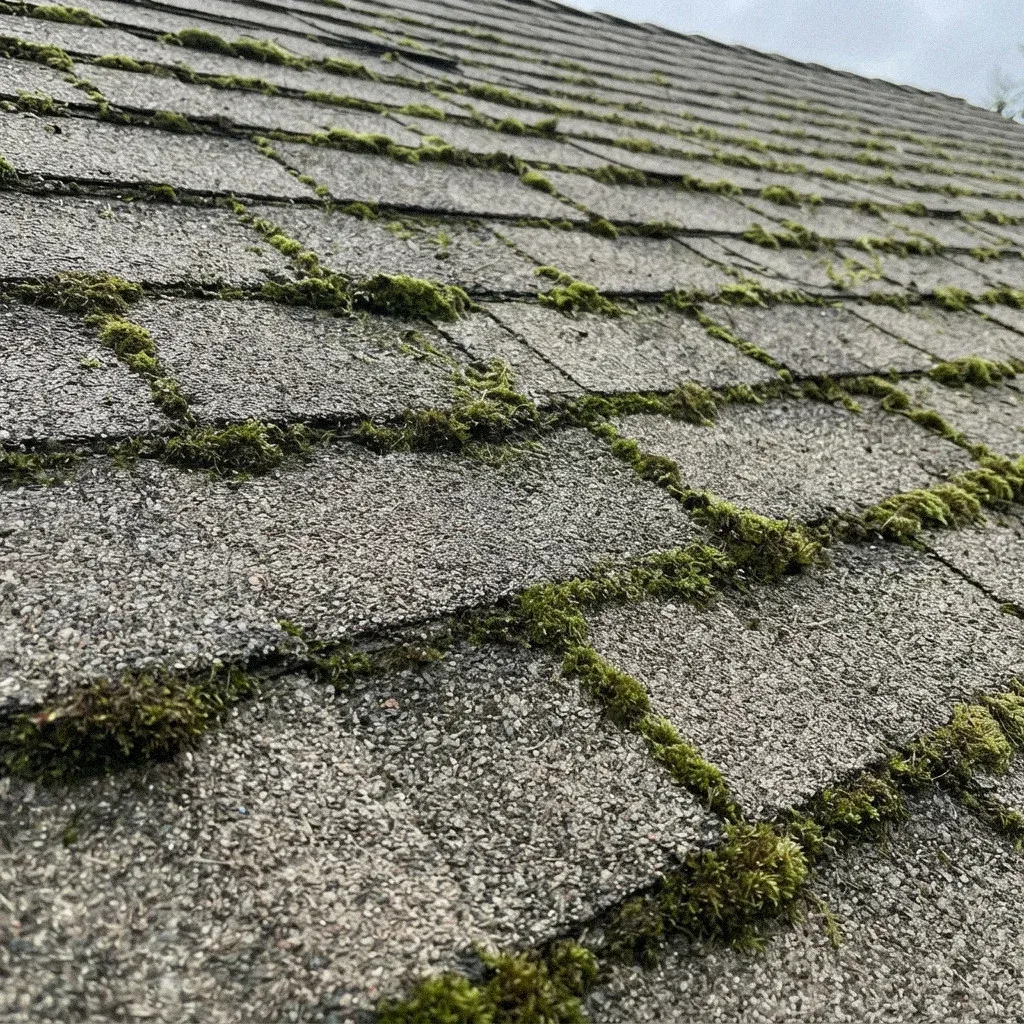
Cleaning Algae and Moss Off Jacksonville Roofs
Soft wash and hand removal that lift algae and moss without stripping the shingle.
Roof Cleaning & Algae Removal in Jacksonville, FL is not one job with one price, whether you're in Sandalwood, Baymeadows, Jacksonville Beach, or elsewhere around Jacksonville, and the work is matched to the building and to the way water actually moves through it here. That is what separates a lasting repair from a temporary one.
Nearly all of this work is residential: residential roofing covers the approach for houses, while commercial and multi-unit buildings are handled under commercial roofing.
Signs You May Need Roof Cleaning & Algae Removal
Green Cushions on Shaded Slopes
Green cushions along the shaded lower courses are the clearest sign of moss taking hold, especially on north-facing slopes near Ortega and Murray Hill where tree canopy keeps shingles from drying out fully between afternoon thunderstorms. Left alone through a Jacksonville summer, those cushions thicken and start lifting shingle edges instead of just sitting on the surface.
Dark Streaking Down the Shingle Face
Look along the shingle edges facing away from the afternoon sun, especially near overhangs shading Riverside and Avondale bungalows. Lichen forms a crusty gray-green patch that grips tighter than moss and resists a light brushing. Left alone, it spreads across the tab surface and holds moisture against the mat underneath. Granule loss often shows up right where lichen has been sitting longest, a sign the surface underneath is already wearing thin.
Gray-Green Patches That Won't Scrape Off
A crusty gray-green patch that will not lift with a light scrape is likely lichen, not moss, and it grips the granule surface itself rather than sitting on top of it. Homes near Arlington and the Southside with older composition roofs tend to carry both moss and lichen at once, and telling them apart matters before anyone decides how to treat either.
Our Roof Cleaning & Algae Removal Process
Roof Walk and Growth Assessment in Jacksonville
Every slope gets checked on foot for where moss, algae streaking, and lichen sit, and whether granule loss or lifted shingle edges already show underneath the growth before any cleaning starts.
Valley and Debris Cleanout Before Rinsing
Valleys and low spots get cleared of leaf litter and pine needles first, since trapped debris removal has to happen before a rinse or it just settles right back into the same low points.
Hand Removal with Low-Pressure Biocide Rinse
The heaviest clumps come off by hand, worked downslope so granules stay put, followed by a low-pressure rinse that carries a biocide treatment across the affected areas to kill what hand removal alone leaves behind.
Lichen Staging and Zinc Strip Placement
Stubborn lichen patches get worked loose in stages rather than scraped hard, and a zinc or copper strip can be installed near the ridge afterward to slow how fast growth returns on shaded slopes.
Why this matters
Jacksonville's summer humidity and near-daily afternoon thunderstorms keep composition shingles damp longer than a dry climate would, and slab-on-grade homes near Arlington and the Westside often sit under mature oak or pine canopy that blocks the sun from finishing the job. That combination is what lets moss and algae streaking take hold on a roof that otherwise looks sound.
Code-Compliant Roof Cleaning & Algae Removal in Florida
Why Pressure Washing Fails Here
Pressure washing damage shows up fast on Jacksonville's composition shingle roofs because the granules that shed UV rays and rain are held on by asphalt, not fused into the shingle. A wand run at close range strips that surface in one pass, and once it is gone the shingle underneath starts breaking down years ahead of schedule under the Northeast Florida sun.
Hand Brushing Protects the Granules
Hand brushing gets the bulk of a moss colony off without touching what is underneath it, worked with the slope so granules stay put rather than washing into the gutter line. The licensed pros we connect you with in Jacksonville pair that with a debris removal pass through valleys and low spots, since trapped leaf litter and pine needles are what let moss take hold there in the first place.
What You Would Pay for Roof Cleaning & Algae Removal
Most roof cleaning & algae removal jobs in Jacksonville fall inside these ranges. The inspection costs nothing and the exact figure is written down before any work starts.
| Roof Layers | Storm Risk | Questions To Ask |
|---|---|---|
| Some crews only tear off and reload shingles. That's fine until valley flashing or a stack boot needs real attention. Jacksonville's afternoon thunderstorms find every shortcut eventually, and a crew that skips flashing work today is booking a callback for next summer. | Roof plus attic peek from inside, checking for daylight or damp decking | an estimated $280–$1520 |
| A crew that also does siding and gutters brings less roof-specific pattern recognition to a reroof in Jacksonville. Nail pattern gone wrong, underlayment skipped at a valley, ventilation ignored — these show up fastest to someone who reroofs full time and nothing else. | Tear-off, new drip edge and pipe boots, haul-off of old shingles included | an estimated $400–$2080 |
| Price alone tells a Jacksonville homeowner little. A bid that skips proper flashing or attic ventilation can look cheap on paper and cost more the first time a heavy afternoon thunderstorm sits over the house for an hour. | Reroof plus fascia board repair where rot is found, no interior ceiling work | an estimated $520–$2880 |
| A crew that reroofs and nothing else sees the same failure points on repeat: nail heads left exposed, undersized drip edge, flashing reused instead of replaced. That repetition means fewer surprises mid-tear-off on a Jacksonville roof. | Whole-property reroof across multiple roof planes, decking replaced where soft | an estimated $720–$4160 |
Get every bid broken into materials, labor, permit, and disposal, not one flat number. A contractor unwilling to itemize is asking you to trust a total you cannot check. Side-by-side, itemized bids show where the real difference sits, and that difference is rarely quality you can see from the ground.
Frequently Asked Questions
Why is pressure washing bad for my shingles?
A pressure washer forces water at a shingle hard enough to blast the protective granules loose, and once those granules are gone the asphalt underneath ages fast under Jacksonville's sun. The licensed pros we connect you with use a soft wash instead, a low-pressure rinse that carries a cleaning solution across the roof without the force that causes that granule loss.
How do the pros actually get moss off my shingles?
The heaviest moss clumps come off first, worked loose by hand and pulled downslope so granules aren't torn free in the process. A low-pressure rinse follows to clear what's left and treat the surface, then valleys and low spots get checked for the leaf litter and debris that let moss settle there to begin with.
How long before moss returns after cleaning?
Not right away, but a shaded roof near mature trees in Ortega Forest or San Jose can grow moss back within a year or two if nothing changes. Trimming back overhanging limbs helps, and some homeowners have a metal strip installed near the ridge afterward, since the trace elements it releases in the rain slow how fast new growth can establish.
Are black streaks on my roof moss or algae?
Black streaks running straight down a slope, rather than clumping into cushions, are almost always algae rather than moss, and they show up most on roofs that hold moisture near heavy shade in Springfield or Avondale. Algae spreads across the surface instead of lifting shingle edges, so it changes how the roof gets cleaned but not whether it needs attention.
Why won't lichen just rinse off my shingles?
Lichen grips the granule surface directly instead of rooting under the shingle edge the way moss does, so it needs more scrubbing to loosen and won't rinse away on its own. The licensed pros we connect you with work it free by hand in stages rather than forcing it, since scraping too hard risks pulling granules along with it.
Do zinc or copper strips stop growth coming back?
Zinc and copper strips work by releasing trace metal ions every time it rains, which slows new moss and algae from taking hold below the ridge. They will not strip off growth that is already established on a Jacksonville roof. The pros we connect you with can install strips as part of a cleaning job so the shingles stay clearer longer between visits, particularly through the humid stretch from June into September.
How much does roof cleaning & algae removal cost in Jacksonville?
A roofing contractor working directly with Duval County homeowners needs a state-issued license, either certified or registered, through Florida's licensing system, not just a local business tax receipt. Ask to see it before signing anything. A number that cannot be verified against the state's own contractor lookup is not proof of anything.
Related Services & Areas
Ready To Get This Handled
One call is enough to start. Say what the roof is doing and roughly when it started, and the licensed pros we connect you with will tell you whether it needs looking at this week or can wait for the next dry stretch. If something is actively coming through a ceiling in Jacksonville, say so on the call, because that moves to the front of the list and gets covered the same day rather than scheduled.
Call (904) 675-6349