Getting a Jacksonville Roof Claim Paid in Full
What Duval County homeowners need documented, inspected, and paid before hurricane season tests the roof again.
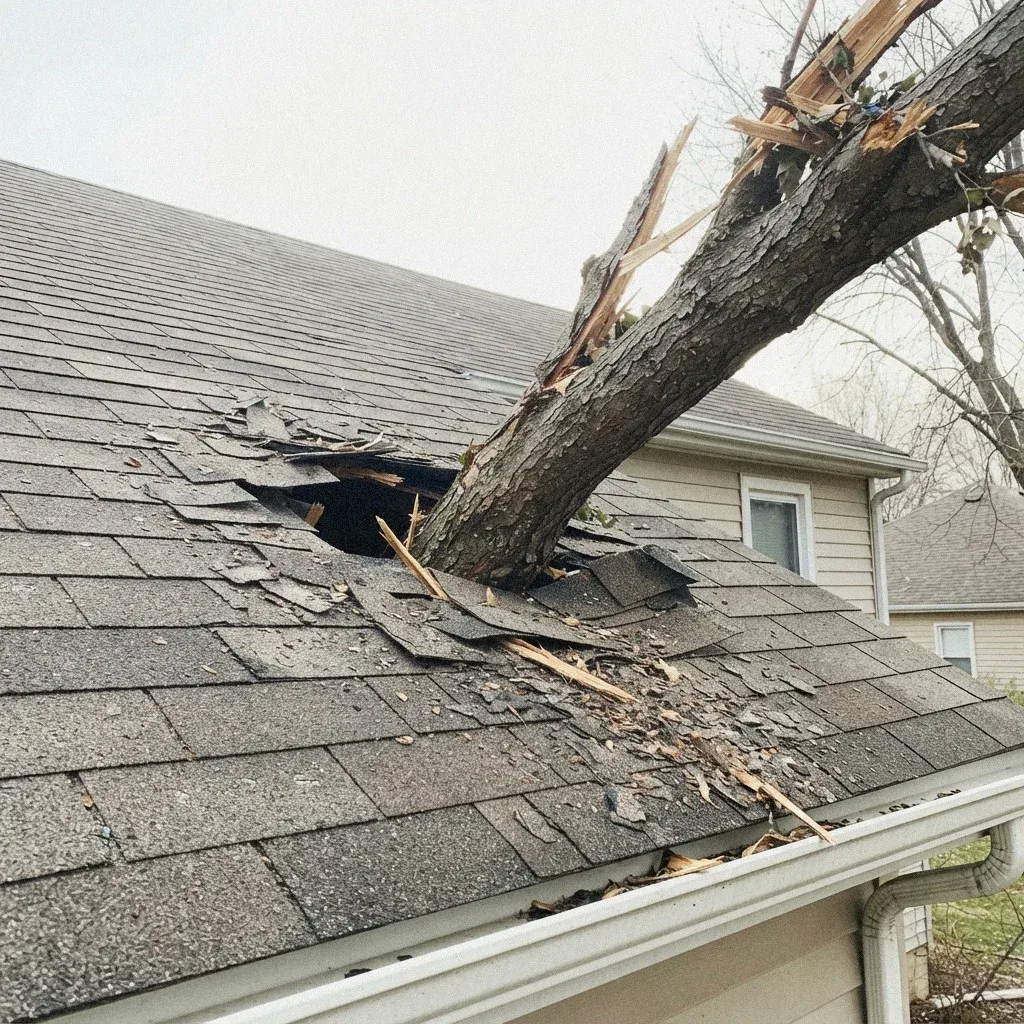
A Jacksonville roof claim turns on whether wind, hail, or a fallen limb caused sudden damage, versus age-related wear that Duval County insurers routinely decline. The adjuster inspects, writes a scope, and pays out under replacement cost or actual cash value terms.
Covered Peril Versus Wear And Tear
A roof insurance claim in Jacksonville comes down to cause. An insurer pays when a covered peril, like wind off the St. Johns River during a tropical storm, tears loose shingles. It pays much less willingly when a roof has simply aged out, since most policies write that off as ordinary deterioration and route it away from claim dollars entirely.
Two clauses in a Florida policy do most of the deciding. The dwelling coverage says what perils are covered, and wind and hail usually are, sometimes with a separate hurricane deductible attached. Then the exclusions and the roof endorsement say what is carved back out: ordinary wear, deterioration, faulty workmanship on an earlier repair, and on many newer policies cosmetic damage that does not affect how the roof sheds water. Reading those two sections of your own declarations before a storm is worth more than any advice about claims, because they decide the outcome before an adjuster ever climbs a ladder in Arlington or Ortega.
The deductible comes off the top before either valuation method matters, and a Jacksonville homeowner pays it regardless of whether the roof sits in Mandarin or Arlington. What often trips people up is depreciation holdback: the insurer withholds a portion of the payout until the roofing work is finished and proof of that work is submitted, then releases the rest.
Documenting Roof Damage The Right Way
Documentation should start before a tarp goes up or debris gets cleared, because that first look at the roof is the best evidence a homeowner will have. Photos from the ground, from a ladder if it's safe, and from any vantage point around the house capture what wind or hail actually did. A dated timeline matters too, tying the damage to a specific storm rather than months of gradual wear.
The proof of loss is the sworn statement a policyholder files laying out the claimed damage and its value, and Florida insurers work from it alongside the adjuster's own findings. A homeowner in San Marco or Springfield who skips or rushes this step often ends up negotiating from a weaker position later, since the insurer's file starts leaning on whatever numbers came in first.
- A covered peril is a named cause like wind or hail; wear and tear from age is routinely excluded on Jacksonville roofs.
- Actual cash value pays the depreciated worth of the roof; replacement cost value pays what it costs to put back, with part held until the work is done.
- The deductible comes out of the payout once per claim, separate from any depreciation the insurer is holding back.
- A scope of loss lists what's damaged and priced to fix, forming the line item estimate both sides work from.
- Proof of loss is your signed, itemized statement of the claim, and it starts the insurer's response clock once filed.
- A mortgage endorsement puts the lender's name on the claim check alongside yours, since they hold an interest in the Arlington or Mandarin home.
The Adjuster Visit And Scope Of Loss
The field adjuster's visit is where most of the claim gets decided. They walk the roof, note the damage pattern, and produce a scope of loss: a line item estimate listing what gets repaired or replaced and at what price. A thorough walk-through covering flashing, valleys, and vents tends to produce a scope that actually matches the damage; a rushed one often does not.
When the scope of loss leaves out damage or underprices the repair, a homeowner can request a supplement, which asks the insurer to add line items or revise pricing before the claim closes. A reinspection sometimes follows, where the adjuster or a second adjuster returns to look at what was missed. This is a normal, non-adversarial step in a claim, not a confrontation.
- Photograph damage from the ground and, if safe, from a ladder, before tarps or repairs cover anything up.
- Write down the date you noticed damage and the thunderstorm or wind event tied to it, since insurers weigh timing.
- Get an independent written estimate from the licensed pros we connect you with before the field adjuster's visit, if time allows.
- Keep receipts for any tarp or temporary fix, since most policies expect reasonable steps and will reimburse those costs.
Replacement Cost Versus Actual Cash Value
These two words on the declarations page decide more of the payout than anything the adjuster writes. Replacement cost value pays what it takes to put the roof back as new, minus the deductible, with a slice held back until the work is finished and invoiced. Actual cash value pays what the roof was worth on the day it was damaged, with age and wear subtracted first and nothing held back because nothing more is owed. On a fifteen-year-old Jacksonville shingle roof the gap between the two can be most of the cost of the reroof. Check which one you have before hurricane season, not after.
A claim denial in Duval County isn't automatically final. Most policies include an appraisal clause, a process where each side names an appraiser to value the disputed loss, and the two appraisers settle disagreements through a neutral umpire if needed. A homeowner can also ask for a reinspection or simply push back in writing on the adjuster's stated reasoning before considering other options.
| Basis | What It Pays | When It Applies |
|---|---|---|
| Payout basis | Replacement cost value | Actual cash value |
| How claim starts | Full line item estimate, minus deductible | Depreciated value, age and wear subtracted first |
| Depreciation holdback | Held until roof work is finished | Not owed back, already subtracted upfront |
| Works best when | Homeowner intends to reroof through the claim | Homeowner accepts a lower payout, skips repair |
| Where to check | Declarations page, dwelling coverage section | Declarations page, dwelling coverage section |
Supplements When The Scope Falls Short
A public adjuster is licensed to handle a claim on the homeowner's side of the table, building the estimate and negotiating with the insurer for a share of whatever the claim eventually pays. That can help on a large or contested loss, less so on a straightforward wind claim above a home in Riverside or Avondale where the damage and the fix are both obvious.
A supplement is the normal way a claim gets corrected, and most Jacksonville reroofs that start under an insurance scope end up needing one. The reason is simple: nobody could see the decking, the second layer, or the rusted valley metal while the old roof was still on. When the roofer finds it, the finding gets photographed and sent to the carrier as an additional line item with a price against it, before that work is covered up. Doing it in that order is what gets it paid. Doing the work first and asking afterward usually does not.
Reinspection, Appraisal, And Public Adjusters
When a claim stalls there are three steps, and they escalate. A reinspection is the mildest: you write to the carrier, say what the first visit missed, and ask for a second look, usually with your own roofer's photographs attached. Appraisal comes next, a process written into most policies where each side names an appraiser and a neutral umpire settles what they cannot agree on. A public adjuster is the third route, someone licensed in Florida to run the claim on your side for a percentage of what it pays. Start with the cheapest one that fits the problem.
One thing to keep straight through all of it: your roofer is not your adjuster. In Florida a contractor cannot negotiate the claim, run the appraisal, or offer to cover your deductible, and any of those being offered is a warning rather than a service. What a roofer should do is measure, photograph, and write a scope with real prices on it, then answer the adjuster's questions about the work. That documentation is often what moves a stuck claim, and it stays on the right side of the line.
What Slows A Duval County Claim
- Florida law sets response windows for insurers after a completed proof of loss, though the exact current deadline varies by claim type.
- Reinspection is a reasonable request when new damage surfaces or the first visit missed part of the St. Johns River-facing slope.
- An appraisal clause lets both sides bring in independent appraisers to settle a stuck dollar dispute without going to court.
- A public adjuster works for you, not the insurer, and typically takes a percentage of the settlement as payment.
- The contractor's role is photos, measurements, and a written estimate — not negotiating the claim itself with your insurer.
- A supplement adds items the original scope missed, like flashing damage found once repairs start on a Baymeadows or Ortega roof.
Frequently Asked Questions
How do insurers tell storm damage from an old roof?
By the pattern, not the age alone. Wind damage looks sudden and directional: creased shingles along one slope, a run of missing tabs on the windward side, debris strikes. Wear looks even and everywhere: granules thin across every slope, edges curled at the perimeter, sealant strips let go. A twenty-year-old Jacksonville roof can still have a covered wind claim, but the damage has to read as an event rather than as a roof that ran out. That is why dated photographs tied to a named storm matter so much.
How soon should I file after a storm?
Sooner is better, and the reason is evidence rather than a countdown. Every week that passes makes it harder to show the damage came from that storm and not from the two that followed. Photograph before anything is tarped or cleared, note the date and the storm by name, then call the carrier. Florida sets time limits on filing and they have changed more than once in recent years, so check the current limit against your own policy rather than relying on what applied last time.
Can I bring in a public adjuster on my claim?
What can I do if my roof claim is denied?
Ask the insurer in writing why the claim was denied, then request reinspection if new damage evidence exists or the wear-and-tear finding seems wrong. Many policies include an appraisal clause for disputed dollar amounts. A public adjuster or the contractor documentation from your Westside repair can support a second look.
Why is the insurer holding back part of my payout?
Many Duval County policies withhold part of the payout until the roof is actually replaced, then release the remainder once you submit final invoices and photos. Check your specific policy language, since not every insurer structures this the same way or on the same timeline.
Want The Roof Documented Before The Adjuster Arrives?
Ask the licensed pros we connect you with to document the roof before your adjuster's visit to Riverside or Arlington.
Call (904) 675-6349