What Happens During Your Jacksonville Reroof
How a Jacksonville crew moves from the signed contract to the last nail swept off the driveway.
A Jacksonville reroof runs from scheduling and yard protection through tear-off, deck repair, underlayment, flashing, field shingles, ridge work, cleanup, and a final punch list, in that order.
Booking the Date and Protecting the Yard
A signed contract in Jacksonville locks in a crew, not a calendar date, since June through September brings afternoon thunderstorms that can push a start by a day or two. Homeowners in Mandarin, Arlington, and the Westside all work around the same forecast window. Material delivery gets timed close to the start so shingle bundles aren't sitting exposed on a driveway through a week of humidity and rain before work begins.
Before anyone touches the roof, the ground gets covered. Tarps go over shrubs and flower beds, especially in older Riverside and Avondale yards with mature landscaping close to the house. Pool cages and patio furniture get shielded or moved. Plywood leans against siding near ladders so nothing gets scuffed. Downspout openings sometimes get covered too, keeping shingle grit and nails out of the drainage line running toward the yard.
Deck inspection follows the tear-off, section by section, before any Jacksonville roof gets new material. The licensed pros we connect you with press on the exposed sheathing, looking for delamination, rot, or nail heads that spin instead of bite. Weak spots get cut out and replaced rather than covered over. Anything questionable becomes a change order, priced and approved before work continues, so there's no guessing about condition once the new underlayment goes down.
Stripping the Old Roof and Checking the Deck
The old roof comes off one section at a time so a wide-open deck never sits exposed through a Duval County afternoon storm cell that builds fast and drops heavy rain with little warning. Crews watch the radar and size each section to what can be dried in and covered before the sky turns. On a home near Pottsburg Creek or the Ortega River, that timing matters even more given how quickly low-lying yards can hold standing water.
Deck re-nailing happens once the old fasteners are visible, since decades of Jacksonville heat can loosen sheathing nails without any obvious sign from below. The crew adds fasteners along a pattern matched to current wind requirements rather than just the spacing the original builder used. Any deck panel that's split, spongy, or delaminated gets pulled and replaced with new sheathing cut to fit before anything goes back over it.
- Scheduling is set after the contract is signed, timed around Jacksonville's afternoon thunderstorm pattern so the deck is not left bare overnight.
- Property protection covers gutters, AC units, and flower beds before tear-off, since falling shingles and old nails damage anything left exposed below.
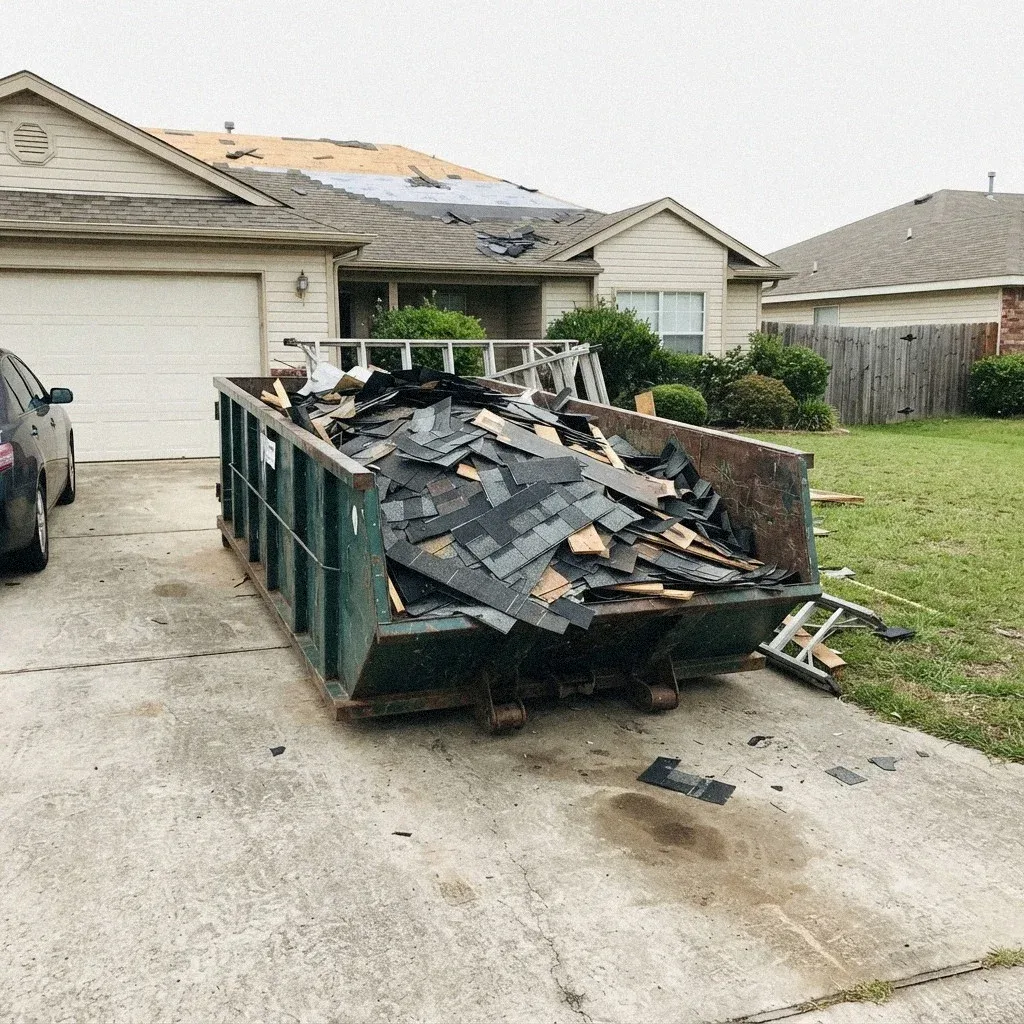
- Dumpster placement follows the driveway layout; a St. Nicholas or San Marco lot with limited street parking may call for a change order to reposition it.
- Tear-off comes off one roof plane at a time down to bare wood, so no more of the house sits open than the day's work allows.
- Deck inspection follows tear-off, checking every sheet of plywood for soft spots, since Jacksonville's rain load finds any gap in the decking fast.
- Re-nailing tightens fasteners that worked loose over the years and swaps any panel gone soft, giving the new underlayment a solid base to grip.
Underlayment, Flashing, and Every Penetration
Once the deck is sound, a synthetic underlayment sheet gets rolled across it in overlapping rows, sealing the plywood before a single shingle goes down. This sheet is what actually keeps water out during a driving summer rain; the shingles above it mostly take the sun and wind. Drip edge gets set along the eaves and rakes underneath or over the underlayment depending on the edge, giving runoff a clean line off the roof instead of behind the gutter.
A starter course of shingles runs along the eave before the field begins, sealing the first row's gaps so wind can't get under the leading edge. Valley metal goes down wherever two roof slopes meet, since that's where water from both sides funnels together and moves fastest. On a hip roof common in Mandarin and San Jose, those valleys and hip lines carry more runoff than any single flat plane, so the metal there has to lap correctly from the start.
- Underlayment covers every inch of exposed deck before lunch, so a sudden Jacksonville squall off the St. Johns River can't reach the plywood.
- Metal edging wraps the perimeter first, then the starter strip locks over it, aiming runoff away from fascia toward the gutters below.
- Valley metal goes in wherever two roof slopes meet, carrying the heavy runoff from Jacksonville's summer rain down and off without backing up underneath.
- Pipe boots seal around every vent stack, closing off the small gaps that turn into a stained ceiling a season or two after move-in.
Layer by Layer: Deck to Drip Edge
Chimneys, dormers, and any wall where an addition ties into the original house get new flashing, since old flashing is a common source of a leak that shows up weeks later as a stain on a ceiling. Step flashing gets layered piece by piece up a sidewall, each piece tucked behind the one above it and under the shingle course beside it, so water sheds down and away rather than working sideways into the wall.
Every plumbing vent and exhaust stack coming through the roof gets a fresh pipe boot, since the rubber collar on an old one cracks from sun exposure long before the surrounding shingles look worn. A dried-out boot is one of the quieter ways rain gets into an attic in Baymeadows or Southside homes, showing up as a damp spot near an interior wall months after the actual failure happened at the roofline.
| Stage | Task | What Happens |
|---|---|---|
| Deck inspection | Check sheathing after tear-off | Finds soft spots before anything else goes down |
| Deck re-nailing | Add fasteners to meet current code | Tightens the surface everything else attaches to |
| Drip edge and starter course | Metal at the eaves, adhesive strip above it | Keeps wind-driven rain from curling under the first row |
| Field shingles | Set in the specified nailing pattern | Covers most of the roof, row by row toward the ridge |
| Final debris check and yard walkthrough | Cap pieces set over the ridge vent | Closes the peak and lets attic air escape |
From Starter Course to Ridge Cap
Field shingles go up row by row once the underlayment, drip edge, and flashing are set, with each course shifted over from the one below so the cut lines don't stack into a visible seam. The nailing pattern follows the shingle manufacturer's spec for Jacksonville's wind exposure, with fastener count and placement checked as the crew works up the slope rather than left to a single pass at the end.
Hip and ridge cap pieces close out the top of the roof, folding over the peak and any hip lines running down from it on homes throughout Arlington and Ortega. A ridge vent often runs underneath that cap on newer installs, letting attic heat escape along the roofline instead of building up under the deck through a Jacksonville summer, which is part of what keeps shingles from aging faster from the underside.
Final Sweep and the Walkthrough
Cleanup happens continuously, with old shingles and nails going into the dumpster as tear-off progresses rather than piling up in the yard until the end. Dumpster placement in Jacksonville usually lands in the driveway, close enough to the roofline that debris isn't crossing a lawn or a neighbor's property line to get hauled away. A magnetic sweep of the yard, driveway, and any flower beds nearby picks up stray nails before anyone walks the property barefoot.
A punch list gets written up for anything still open once the roof itself is done: a flashing edge that deserves a second pass, a gutter section knocked loose during tear-off, or a change order item like extra decking that got swapped in partway through. Each item gets checked off before the job is called finished, so nothing small gets left for the homeowner to notice on their own weeks later.
The Reroof, Stage by Stage
- A signed contract and scope come first, naming the shingle line, the tear-off depth, and the licensed pro handling the fieldwork.
- Material delivery lands a day or so ahead, stacked in the driveway or hoisted onto the roof depending on how the lot sits.
- Field shingles run from the eave upward, each row locking over the fastener line of the one beneath it in a set pattern.
- Hip and ridge caps close the peaks last, and a ridge vent gets cut in if the plan calls for one.
- Cleanup clears loose shingle debris, spent wrappers, and stray fasteners from the yard, gutters, and driveway before the crew leaves.
- A magnetic sweep and final punch list close things out, with any leftover item fixed before the homeowner signs off.
Frequently Asked Questions
How long does the crew stay on-site each day?
Dumpster placement in Jacksonville is almost always the driveway, since that keeps the haul distance from the roof to the dumpster as short as possible. On a corner lot in neighborhoods like San Marco or Murray Hill, the crew may angle it toward whichever side of the house the tear-off is happening on first, but it rarely sits anywhere but a driveway or the curb directly in front.
What if my roof deck turns out rotten?
Dumpster placement in Jacksonville turns on driveway width and how close it sits to the street. Narrower lots near Riverside or Springfield sometimes need the container set toward the curb, while wider Mandarin or Baymeadows driveways let the crew keep it off the pavement entirely, closer to the garage.
How do they keep my yard and driveway clean?
It gets tested with a probe once the old shingles are off. Soft or delaminated plywood found under an older Murray Hill or Avondale roof gets cut out and replaced before anything else goes down, since new shingles laid over spongy decking will not hold their nailing pattern.
Why does the crew run a magnet over my lawn?
Nails and staples scatter across the yard during tear-off no matter how careful the crew is, especially on a breezy day off Beach Boulevard. Running a magnet over the driveway, walkway, and grass afterward catches what a broom or a blower would leave behind for a bare foot or a mower to find.
What gets checked at the final walkthrough?
It is the short list a pro walks with you once the roof is done: a hip cap set a little off-line, a smear of sealant that needs trimming, a downspout knocked loose during cleanup. Anything on it gets fixed before the job is called finished.
Ready to line up your Jacksonville reroof?
Have a Jacksonville roof coming up for replacement? Share the details and we'll connect you with a licensed local pro.
Call (904) 675-6349